
Get support
Jump to a section
Topics in this section
Social Workers and Deaf Community Officers
Our qualified social workers and Deaf Community Officers have a strong understanding and knowledge of the issues affecting a person who is Deaf, deafened or hard of hearing. They can work with you, your family, or your carer.
What we can provide:
- Practical and emotional support
- Supported self-assessments, support plans and reviews
- Support to remain independent in your own home
- Help to identify and apply for supported accommodation
- Practical support, e.g. completing forms for housing
- Advice and information for Deaf parents
- Guidance on developing networks to reduce isolation – often with support workers or volunteers
- Employment support; for example, facilitating meetings with managers or involving Access to Work
- Facilitating equal access or assistance in negotiating with local or voluntary organisations, services or companies.
- Translating hospital, Drs and other letters into BSL
Support is provided to ensure people experience choice and control in their lives. Our team are committed to ensuring that Deaf people in need of care and support receive high quality services and are treated with dignity and respect.
Or you can contact us via the following:
SMS: 07860 026269
Convo via: sightforsurrey.org.uk
Email: info@sensoryservices.org.uk
Voice Line: 01372 377701
Vision Impairment Support Service
We’re proud to have a dedicated team of highly skilled professionals who support people in Surrey living with a vision impairment. Every Sensory Specialist Worker is trained to at least diploma level in Rehabilitation Studies and holds national accreditation in assessing people with combined sight and hearing loss. With more than 20 years of experience, our team offers a wealth of knowledge and expertise.
Our goal is simple: to empower people to have choice, control, and, where possible, to live as independently as they wish.
You do not need to be formally registered as having a vision impairment to access our services.
If you’d like information, advice, or to talk through your needs, we’re here to help.
How we help
Is your sight loss causing you difficulty with:
- Reading
- Pouring liquids, preparing meals or performing other activities in the kitchen
- Crossing the road
- Communicating with others
- Accessing information
- Accessing the community
We can help with:
- Information and advice
- An opportunity to talk through the effects of sight loss and combined sight and hearing loss with highly trained staff
- Professional assessment of your needs
- Everyday living skills advice
- Equipment to help you to manage at home
- Mobility training to help you get about safely
- Communication skills training
Our services are open to anyone who lives within the county of Surrey and who is blind or partially sighted or with combined sight and hearing loss.
We also provide essential information and support for friends and families of people who are blind or partially sighted.
We maintain the register of people with vision impairment for Surrey County Council.
Living with hearing loss
Living with hearing loss can be challenging and can affect many parts of daily life. Whether it happens gradually or suddenly, losing part of such an important sense can feel overwhelming. Communication may become harder, and it’s common for people to feel isolated or less confident socially. Work, relationships, and everyday activities can all be affected. Some people may even feel unsafe or disconnected because they can no longer hear sounds like traffic, voices, or music.
Hearing Loss Advisors at Sensory Services can provide information and support to assist you to manage your hearing loss.
How our Hearing Loss Advisors can help
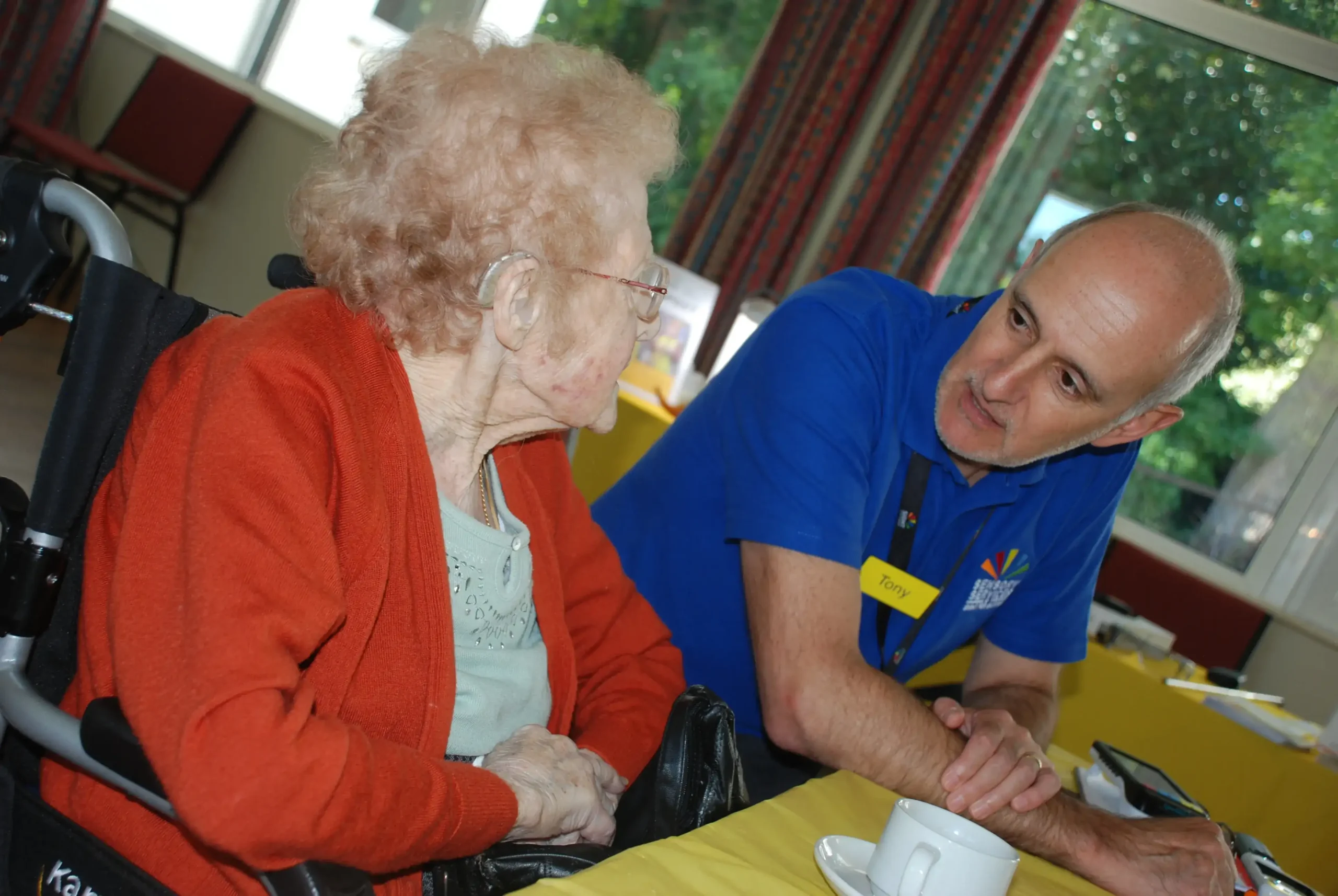
Our Hearing Loss Advisors at Sensory Services are here to offer information, guidance, and practical support. The team works with individuals, families, and groups to help people understand their hearing loss and find ways to stay connected and confident.
Support includes:
- Clear information about hearing loss
- Communication skills training
- Advice on equipment and technology that can make life easier
When to reach out
Hearing loss affects everyone differently. You may benefit from support if you are:
- Finding it hard to join conversations with family or friends
- Feeling isolated or avoiding social situations
- Struggling to use the telephone
- Missing your doorbell or phone ringing
- Having difficulties at work
- Finding it hard to hear announcements on public transport or in public places
Get in touch
Please contact us using one of the communication channels below
Email: info@sensoryservices.org.uk
SMS: 07860 026269
Telephone: 01372 377701
Hear Here
We also work in partnership with the Diocese of Guildford and the NHS on a project called Hear Here. This service provides community‑based hearing aid maintenance delivered by NHS‑trained audiology volunteers.
To find your nearest drop‑in session, please visit Hear Here.
Eye Clinic Liaison Officers (ECLOs)
Our Eye Clinic Liaison Officers (ECLOs) are here to support anyone diagnosed with a vision impairment in a Hospital Eye Clinic. They help people understand and access the wide range of services available through Sensory Services by Sight for Surrey and other organisations.
Hospital eye clinics provide excellent medical care, but many people also need emotional, social, and practical support — especially if they’ve recently been diagnosed with sight loss. That’s where our ECLOs make a real difference.
Where you can find us
Our ECLO team is currently based in the following hospitals:
- Ashford & St Peter’s
- Royal Surrey County Hospital (RSCH)
- Frimley Park
- East Surrey Hospital (SASH)
- Epsom & St Helier
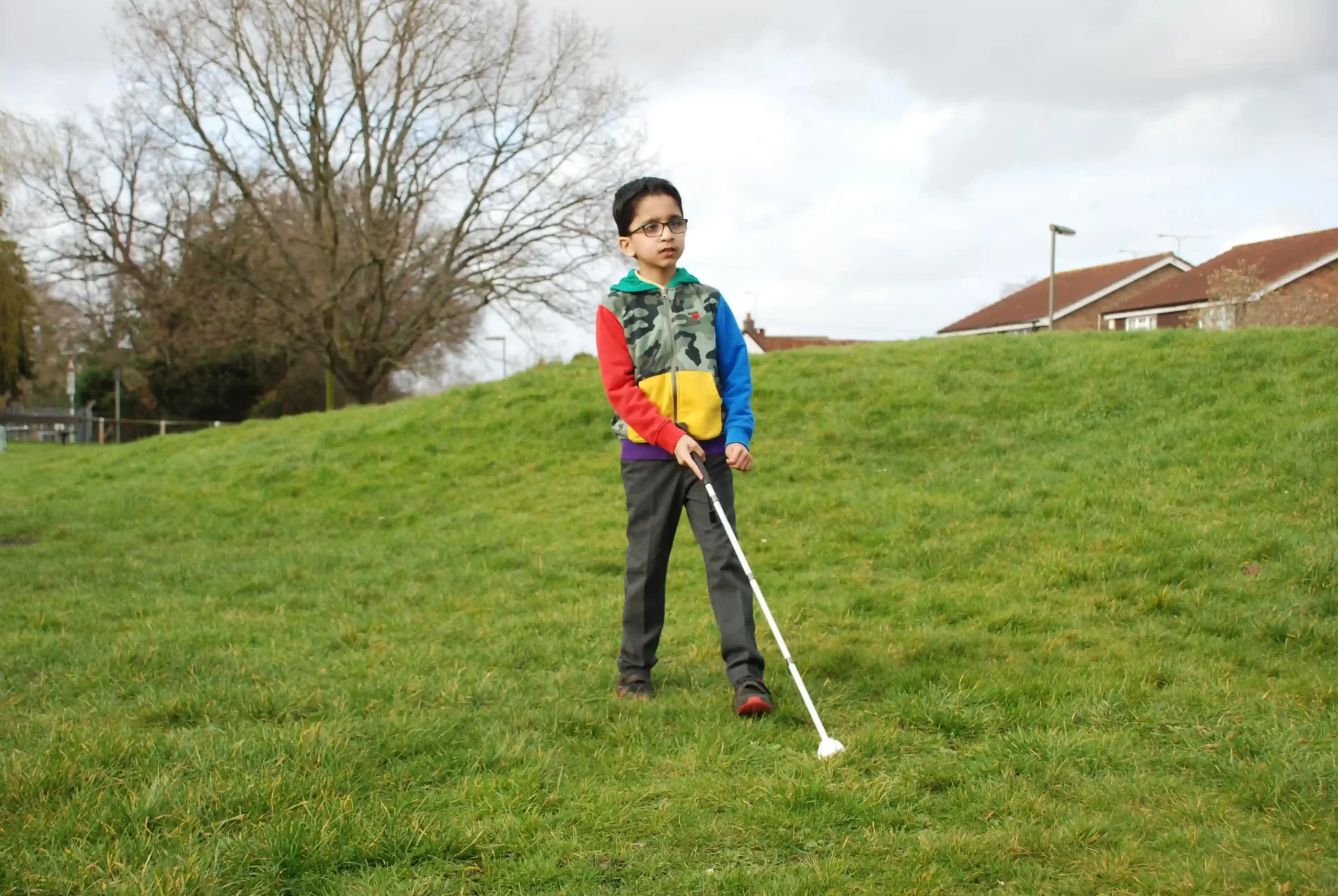
Another important part of the ECLO role is working with ophthalmic consultants and nurses to ensure they know how Sensory Services by Sight for Surrey and partner organisations can support their patients. The more people who know about our services, the more effectively we can help those living with visual impairment.
If you’d like to find out more, please contact our Helpdesk on 01372 377 701 or email helpdesk@sightforsurrey.org.uk.
Hospital Passports
We’ve created a Hospital Passport to support patients who may need to stay in hospital. This simple guide helps hospital staff understand your needs and how best to support you.
One key feature of the passport is a diagram where you can shade the areas of your vision that are most affected. If you’d like help completing this, please get in touch with our Eye Clinic Liaison Team on 01372 377 701 or email dutyeclo@sightforsurrey.org.uk.
Communicator Guides
Our Communicator Guides are specially trained in communication and guiding skills to support people who have both sight and hearing loss.
Their expertise helps reduce the isolation, confusion, and everyday challenges that can come with dual sensory loss (also known as deafblindness). They also offer helpful advice and information to families and carers.
The goal of the service is simple: to empower people with combined sight and hearing impairments to have choice, control, and—if they wish—to live as independently as possible.
Why do we offer Communicator Guides?
Everyone with a combined sight and hearing loss deserves the chance to live independently and make their own choices.
Because around 95% of how we understand the world comes from what we see and hear, losing both senses can create significant challenges. Dual sensory loss is a distinct disability with its own unique needs, and it requires specialist support.
We are proud to be one of the UK’s largest providers of services for people with combined sight and hearing impairments, including Communicator Guides.
Who can access this service?
This service is available to anyone with both sight and hearing loss. There’s no need to be formally registered as having a visual or hearing impairment.
Our Communicator Guides are skilled in a wide range of communication methods, including:
- British Sign Language
- Hands-on Signing
- Deafblind Manual
- Clear Speech
- Finger Spelling
- Block Communication
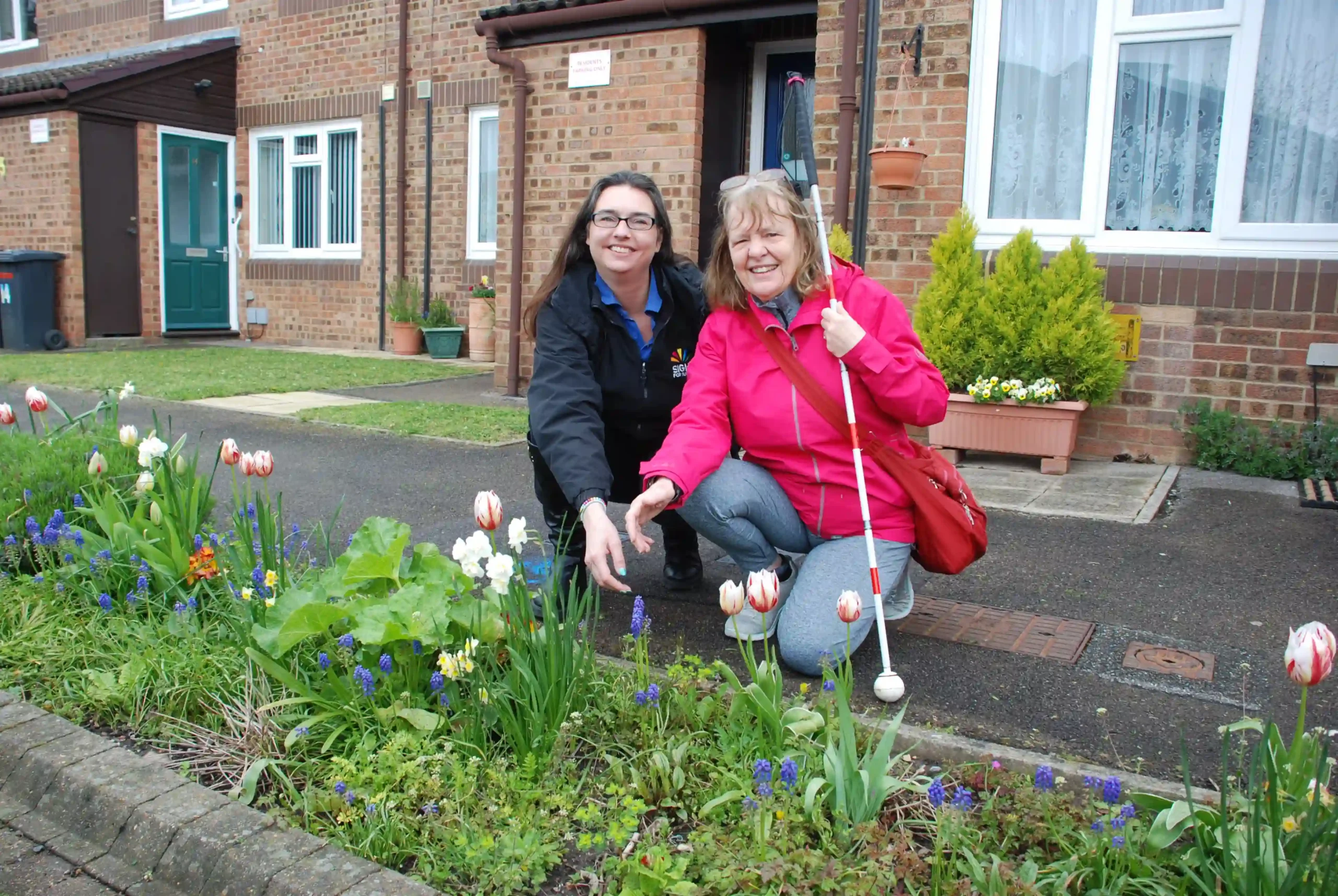
Larraine’s story
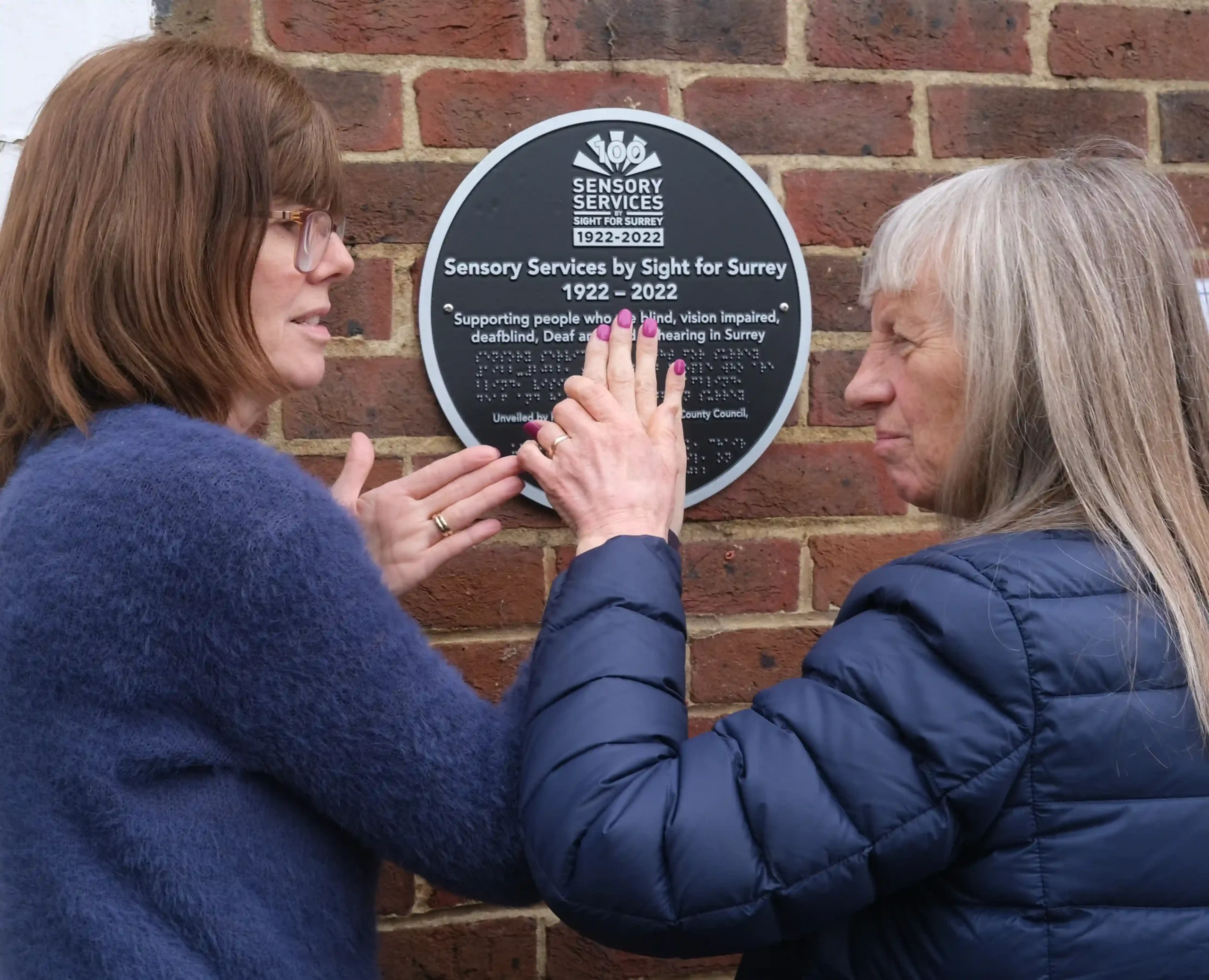
Larraine has been registered deafblind since 1992 and has been working with her Communicator Guide, Caroline, for more than six years. Based in Egham, they meet every week to enjoy leisure activities together and stay on top of important day‑to‑day routines.
“Caroline is my eyes and ears — I borrow her hearing and vision to access the world,” Larraine shares. “With Caroline, I stay independent. She supports me to do the things I want to do.”
Caroline, a Drama Teacher, became Larraine’s personal Comm Guide after spending 12 years volunteering as a Befriender with Sight for Surrey.
The pair use a unique form of non‑verbal communication called haptic signing. Through gentle, coded touch, they’re able to communicate discreetly — something especially helpful during Larraine’s gym classes. “We have created different codes of touch to translate specific Pilate’s terms, such as a ‘bridge’ position” Caroline explains. “I stand opposite the instructor, watching and listening and then relay the instructions by tapping Larraine’s shoulder. The system is quite slick now!”
Caroline also helps Larraine stay connected with the people around her. “One of the women is marathon training and I can keep up to date with her progress.”
Their work together isn’t just about leisure, though. “When I am in the supermarket, I can’t tell when there is an offer on or check best-before dates on food packaging” Larraine says. “Caroline helps me pick my weekly shop – and she knows my preferences. The same goes for clothes shopping; it is important to me to look stylish and coordinated. Caroline helps me with this.” In the home, making telephone calls, booking theatre trips and dentist appointments can bring about challenges. “Having a Comm Guide I can trust cuts down a huge amount of hassle and time.”
“Being a Comm Guide has changed my outlook on life too,” says Caroline. “Larraine is always so positive, so energetic. She always looks on the bright side. I feel lucky to be a part of her life and enjoy my work so much. I am reminded of how precious experiences are and am grateful for the memories we share,” she says holding back tears of happiness. “Every. Single. Day.”
For more information about Communicator Guides, please contact us.
Vision impairment
Living with sight loss can bring new challenges, but no one should face them alone. Our vision impairment services are here to support people of all ages with practical advice, resources, and access to specialist support. We work to empower individuals, promote independence, and ensure that everyone has the opportunity to live well with vision impairment.
Below are the services we offer to support people who are blind or partially sighted.